HKB 24/972 Finnlandsnes


Last weekend me and the GirlfriendWife saddled up the car and went for a little roadtrip. We were going on a Bunkersafari to an old German Atlantikwall fortification. Now, just after the snow has gone, is the time for such expeditions, before the vegetation really wakes up and covers the sites in greenery.
It was a two hour drive to the coast, but before finding the bunkersite we stopped at the shooting range where the local PRS (Precision Rifle Series) club had a competition. It was very nice smelling the gunpowder and seeing the guys hitting targets from 300 meters to
1040 meters from various positions.
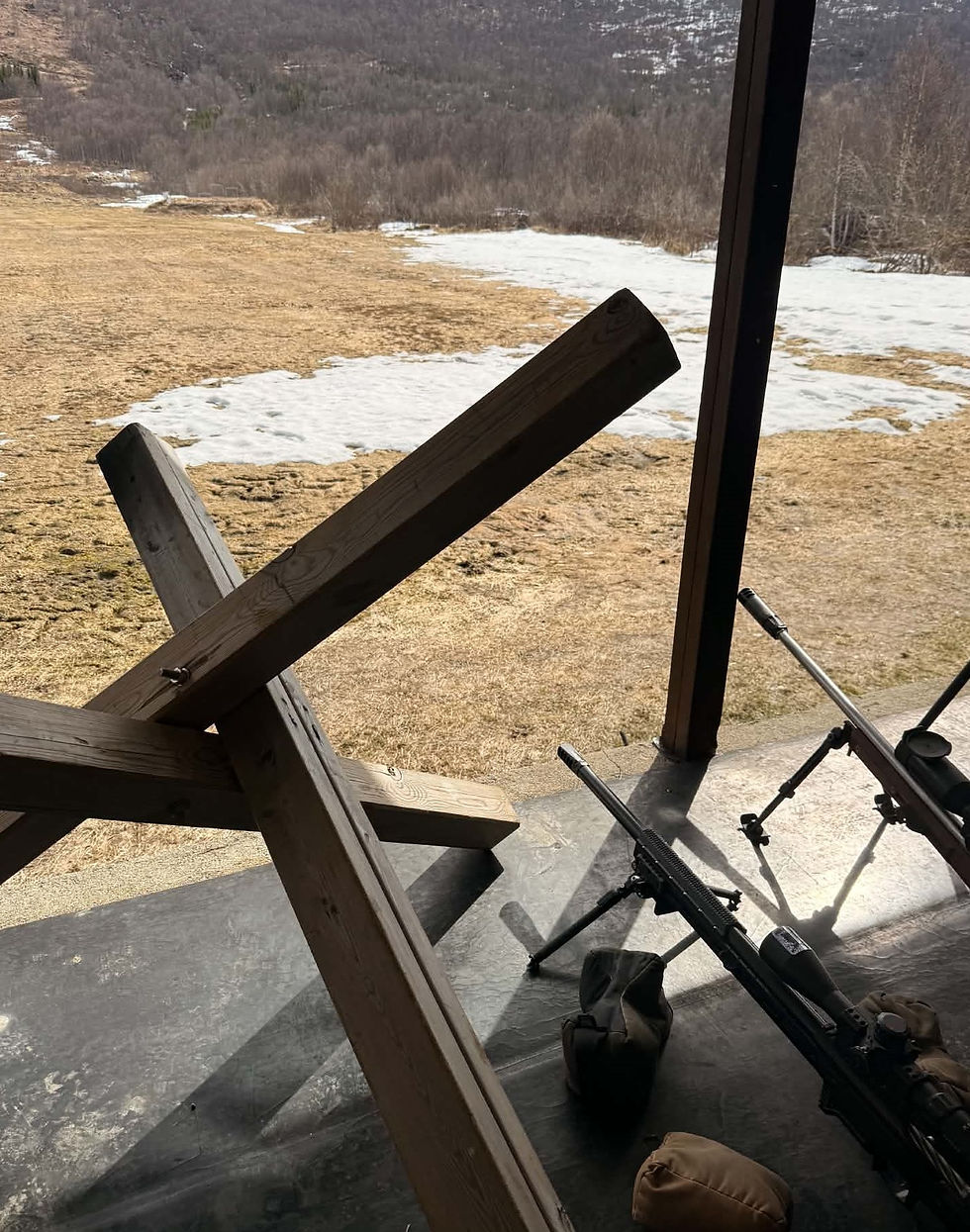
After a couple of hours at the range we jumped back into the car and found the fortification nearby.
In 1941 Wehrmacht began the construction of what became Heeres Küsten Batterie (HKB) 24/972 Finnlandsnes, which sorted under Artilleriegruppe Senja.
It was built across two small hills and was initially set up with four 15.5 cm s.F.H. 17 Polish guns, which were in December 1942 replaced by four 10.5 cm K. 331 French cannons. The range of the 10.5 cm guns was 12000 meters.
The fort also had a 7.5 cm- and a 3.7 cm gun, six machineguns (two heavy and four light), two 2 cm Flak cannons and ten stationary flamethrowers. It also had a 60 cm searchlight.
Its Feldpostnr. was 46 439.
When we arrived we wasn`t really sure where to begin, but we asked the receptionist at the camping beneath the hills, and she provided us with a pamphlet with maps and info, and sent us up the road together with her grandmother who fed us the information she had about the place, and we spent several hours trying to catch all the concrete.
We saw most of it, but missed a couple of the installations as we didn`t want to disturb the families enjoying the weekend in their cabins.
Some of the positions had been destroyed by roadworks but most of it is still there behind a maze of trees and sapplings. The place is very overgrown and a visit would be best early spring or very late autumn if one wishes to see anything other than the spectacular surroundings, but definitely worth a visit.


Comments