Into the Oxalic With It


Here in the far north days are getting brighter as the tilt of the earth is slowly giving us more and more of those popular rays of sun. The temperature is alternating between seriously cold, like last nights -19 Celsius below zero, to the almost summery -4C this morning, and we have the snow-rich and stormy months of March and April coming up soon. So winter is far from over, and there are months and weeks still until the hunt for rust can resume.
What better to do then, than cleaning up some of the last seasons finds.
During the summer I found two German helmets, and just before winter arrived I dug up a third. One of those I sold to help fund some new equipment I needed, but the two others were still laying in a box covered in soil and rust.
This week it was time to give these two lids a cleaning, and I began by giving them a good brushing, and a quick rinse with water.

Lid 1:
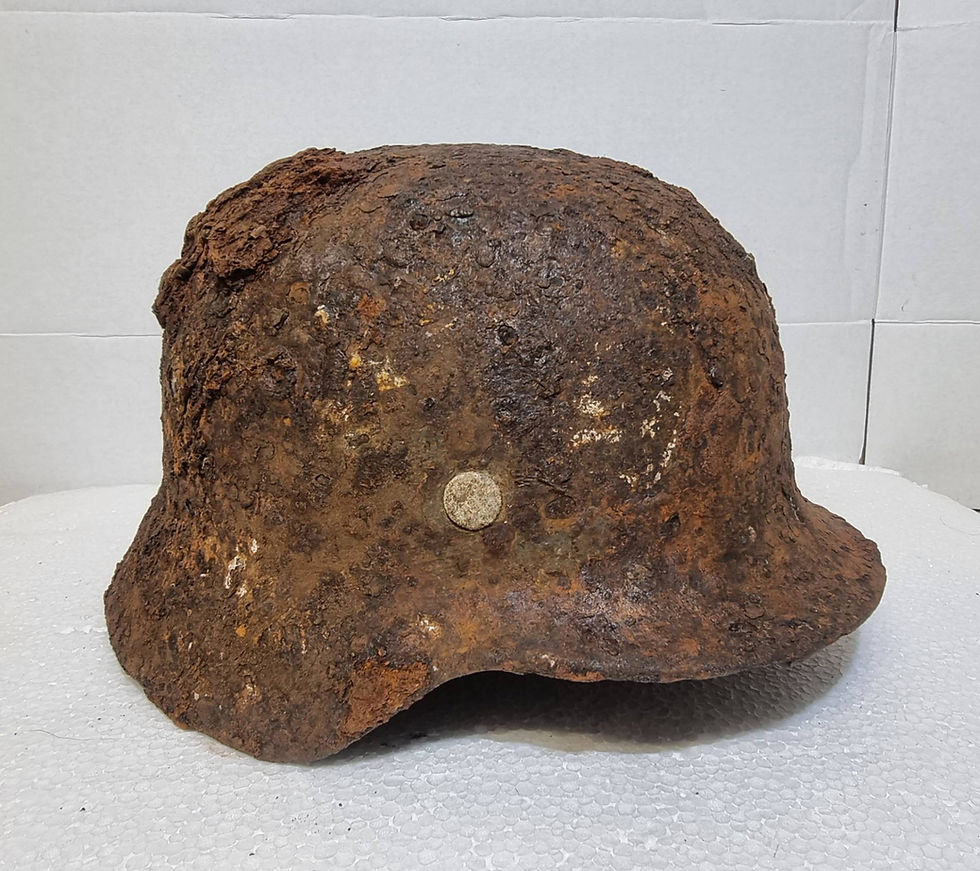
Lid 2:

After the light rinse, I drew the rust buckets a warm bath. Of course armed with gloves and good ventilation.
First I poured just enough water to cover the bottom of the tub. Then I threw in a handful of Oxalic acid as a substitute for bath salts and dissolved it by stirring. Now I put in the helmets and filled hot-hot-hot water until the lids were submerged. Very warm water seems to get the best effect from the acid.
With this, the first step was done and I could relax for up to an hour with some coffee. I did an inspection after 30 minutes, but when an hour had passed I gave the helmets a brushing under running water.


I have several brushes to choose from, of different sizes and softness. Some are better to use inside the lid, and some are more suited for the outside, and I try to use finer brushes over decals. Usually I do not use any steel brushes, but once in a while it is called for, but I then try to use it gently so as to not mess up any paint.
Small flakes of paint, crud or stones might fly off as shrapnel during this process so protective eye-wear could be considered if one feel that the manly eye-protecting squint isn`t adequate.
After brushing the helmets I felt more rust could be loosened so I gave them another hour in the bath, before rinsing them again.

I decided to let them have a third round in the acid, this time for half an hour, and I realized I wouldn`t be able to get more of the original paint visible after the final brushing. I left them for several hours in clean fresh water to neutralize the acid, dried them thoroughly and covered them with wax.
There are many ways to preserve a helmet, some use oils and some use wax of different kinds. I am using a microcrystalline wax which I make myself.
Then to the result. The first helmet looks like it have been in a fire. It is crusty and blackened and very little rust came off it, and little paint had been preserved. Inside its rim I could see ET66 stamped into the metal.
Lid number two was way better. Lots of the rust came off, revealing several layers of green paint, it even looks like it was painted in a two-tone green camo. Parts of a Heer decal became visible, and inside in the back rim the soldiers name, rank and feldpost number revealed itself, painted in white. A real nice surprise which makes this one a keeper!
The name looks to be Maier Alois, followed by the rank St.gefr. Then a unreadable word before the Feldpostnumber which looks to be 46190, a police regiment.
So these are some of the things going on when metal detecting can`t be done here in Winter Wonderland.
Thanks for reading. I hope you`ll have a good week.
Lid 1 Cleaned:

Lid 2 Cleaned:


Comments